Complete Guide to Running a Garage Sale
A great garage sale is not luck. The people who clear their driveway by noon and count real money at the end of the day all do the same handful of things well: they plan ahead, price to sell, make their sale easy to find, and set it up so people can actually shop. None of it is complicated — but the details add up, and the difference between a slow, frustrating Saturday and a genuinely good one usually comes down to preparation.
This is the whole playbook, start to finish. Work through it once and you will know exactly what to do, in what order, and why. (First, a quick check: if you're clearing out an entire home rather than a curated pile of cast-offs, a different format may fit better — see estate sale vs garage sale vs yard sale.)
In this guide
- Planning and prep — dates, rules, and gathering your stuff
- Pricing your items — how to use comparable values so you neither give things away nor scare buyers off
- Advertising and signage — getting people to actually show up
- Setup and layout — arranging your sale so it sells itself
- Running the sale day — change, early birds, haggling, and safety
- Accepting payments — cash, apps, cards, and selling online for local pickup
- Wrapping up — markdowns, donating, and what to keep
In a hurry? Grab the ready-to-follow garage sale checklist and work straight down the list.
Planning and prep

Good sales start a week or two before anyone shows up. The earlier you start gathering, the more you will find — half the value of a garage sale is the stuff you had forgotten you owned.
Pick your date and time. Weekend mornings are the classic choice, and for good reason: serious bargain hunters shop early and they shop on Saturdays. Starting around 7–8 a.m. and running until early afternoon captures the crowd without dragging into a dead afternoon. Check the weather forecast and have a rain plan (a backup date, or moving everything into the garage). If your neighborhood or town holds an organized community or multi-family sale weekend, join it — the shared advertising and foot traffic almost always beat going it alone.
Check the local rules first. This is the one place where "just wing it" can cost you. Whether you need a permit, how many sales you can hold per year, where you may place signs, and whether any sales tax applies all vary by city, county, and HOA — there is no single national answer, and the rules change from one town to the next. Take five minutes to look up your own municipality's garage-sale or yard-sale rules (many post them online) and check your HOA if you have one. This guide can't tell you what your specific rules are and none of it is legal or tax advice — but knowing before you start saves you a headache on the day. Read the full guide: garage sale permits and sales tax — what to check →
Pick the right weekend. Timing quietly makes or breaks turnout. Read the full guide: the best time to have a garage sale (season, day, and hour) →
Gather and sort. Go room by room with three destinations in mind: sell, donate, and keep. Be honest — if you have not used it in a year and it is not sentimental, it is a sell. Group like with like as you go (kitchen, tools, kids' clothes, books) because that same grouping becomes your table layout later. Clean things up: a wiped-down appliance or a folded set of clothes sells for more than the same item dusty and crumpled. Test anything electrical and note what works.
A multi-family sale is worth it. Roping in neighbors or family multiplies your inventory, splits the advertising and signage effort, and pulls a bigger crowd — more tables means more reasons for a passing car to stop. Agree in advance on how you'll keep each household's money straight (color-coded price stickers are the simplest trick). Read the full guide: how to organize a multi-family or neighborhood garage sale →
Gather your supplies the day before. A handful of cheap items make the day run smoothly, and running out mid-morning is a needless headache. Have on hand: price stickers or masking tape and a marker; a cash box or apron plus your starting change; folding tables and a clothing rack or rope; grocery bags and some newspaper for wrapping; poster board and a thick marker for signs; painter's tape or stakes to put them up; a couple of chairs and a drink for yourself; and an extension cord so shoppers can test that lamp or radio before they buy. Set everything out the night before so the morning is just carrying tables to the driveway, not hunting for a marker.
Pricing your items
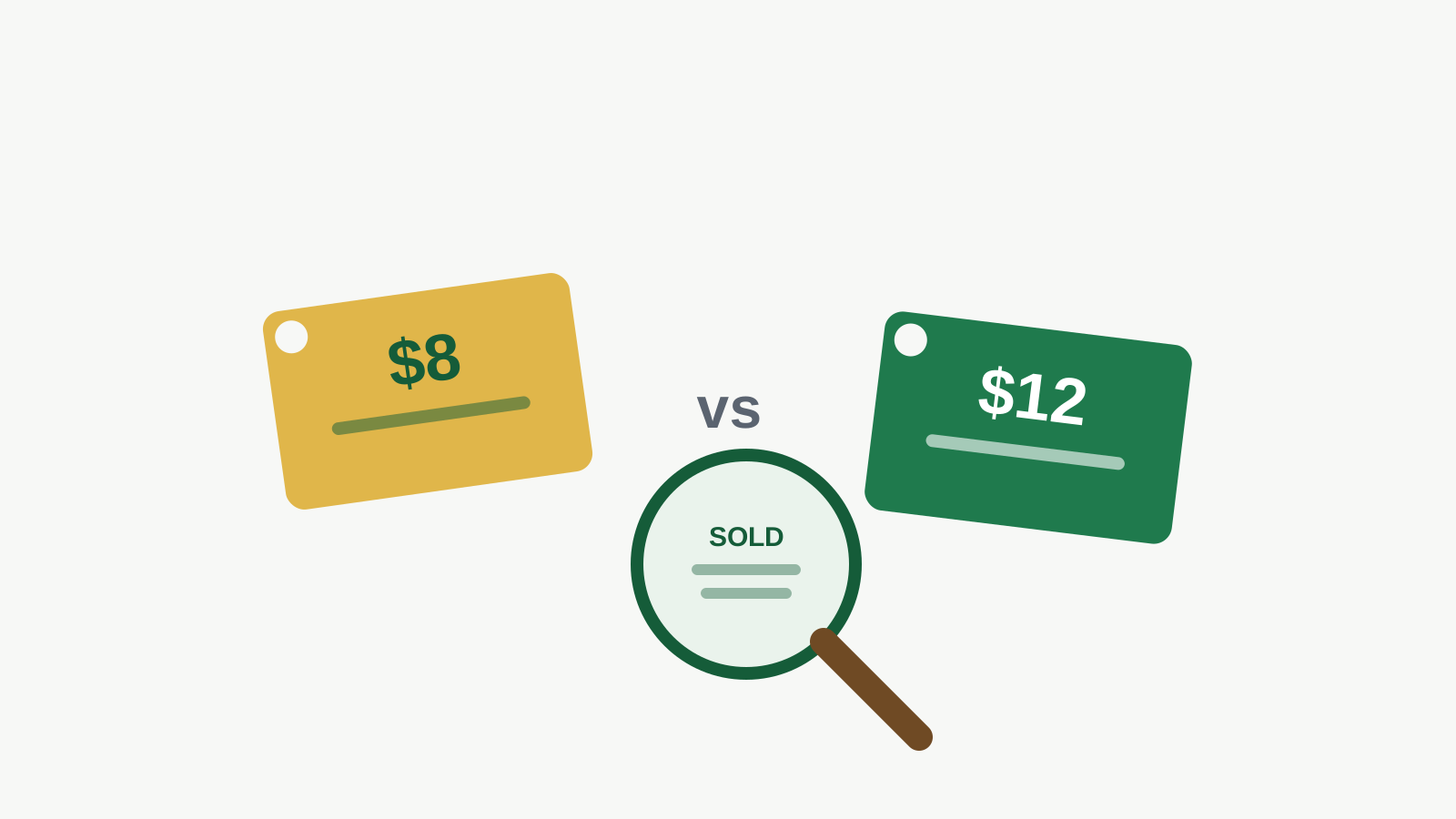
Pricing is where most sales are won or lost. Price too high and items sit all day; price with no logic and you leave money on the table. The fix is to stop guessing and start using comparable values — "comps."
What a comp actually is. A comp is what a similar item, in similar condition, actually sold for — not the sticker price when it was new, and not what someone is asking for one online. Asking prices are wishes; sold prices are reality, and reality is what you want to price against.
How to find comps in a few minutes:
- eBay sold/completed listings. Search the item, then filter to "Sold items." This is the single best free source of real-world resale value for almost anything — tools, electronics, brand-name goods, collectibles.
- Facebook Marketplace and local buy/sell groups. Look at what comparable items in your area have gone for (and how long they lingered). Local demand matters.
- Past garage sales. If you've sold before, you already know what your neighborhood pays for a paperback or a coffee maker. Trust that.
Adjust for condition. A comp is a starting point; then you discount for wear. A tool with a cracked case, a book with a bent cover, or a toy missing a piece is worth a fraction of a clean, complete one. Be realistic about your item versus the one that set the comp.
Then price at garage-sale reality — a fraction of retail. Shoppers come to a yard sale expecting deep discounts. As a rough rule of thumb, ordinary used goods sell for somewhere around 10–30% of their original retail price, depending on condition and demand; genuinely desirable or hard-to-find items can command more. Comps tell you where a specific item lands inside that range.
A few tactics that move inventory:
- Round, simple numbers. 25¢, 50¢, $1, $2, $5. Nobody wants to fish for exact change over a $1.75 mug, and simple prices speed up your line.
- Price everything. Unpriced items make shoppers ask, and many would rather walk than ask. A visible price closes the sale for you.
- Bundle the small stuff. "Paperbacks 3 for $1," "fill a bag for $5." Volume beats squeezing every dime out of a 50¢ item.
- Leave a little haggle room. Price a touch above your true floor so you can say yes to an offer and both of you feel good.
Read the full guide: How to price garage sale items using real comparable values →
Advertising and signage
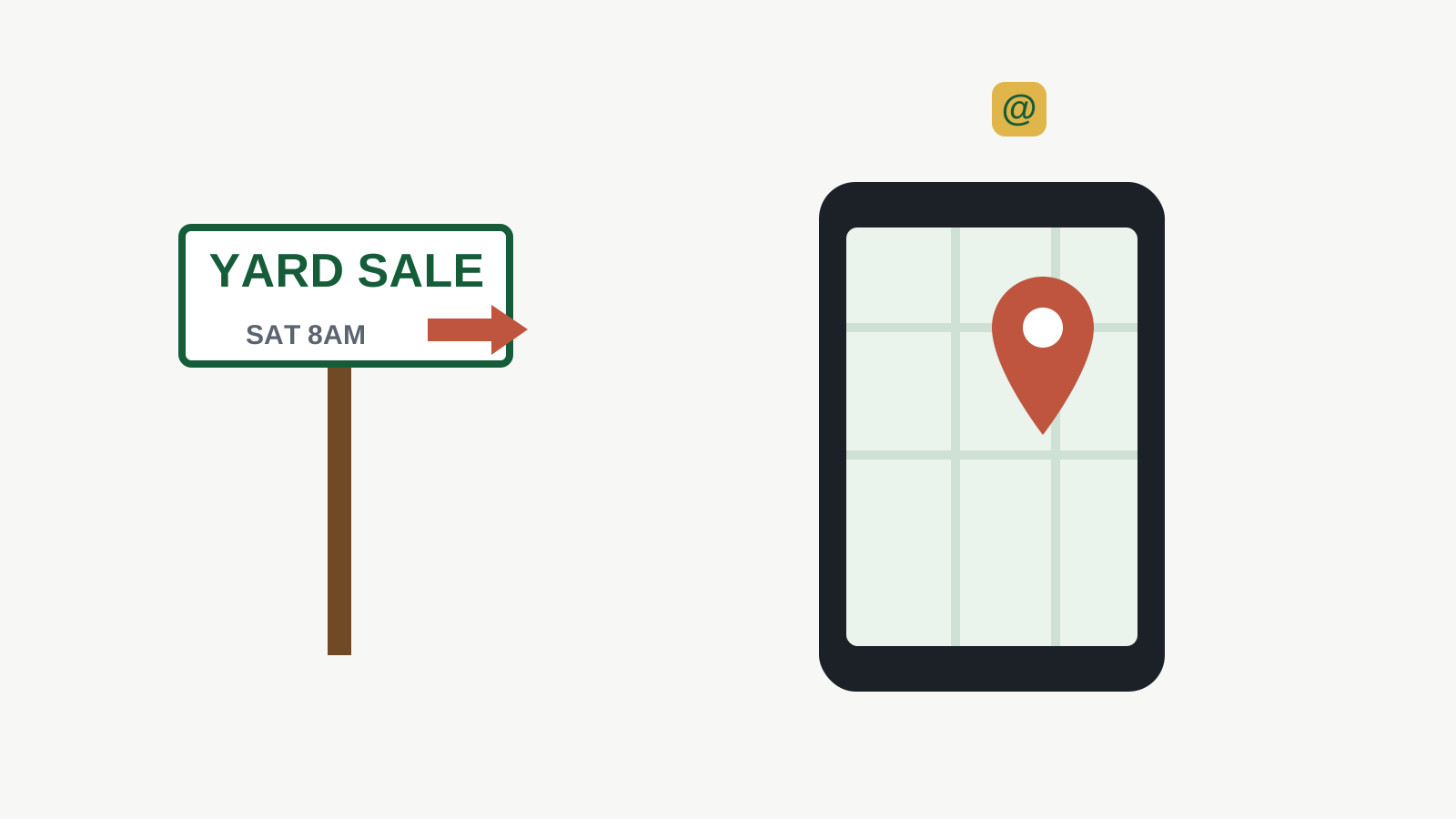
The best-priced sale in the world earns nothing if nobody finds it. You want two things working together: an online listing so planners can find you before Saturday, and physical signs so drivers can find you on the day.
List it online, with photos. A listing with a clear title, your date and hours, the neighborhood, and a few good photos of your best items will pull people who are specifically out looking for sales. Photos matter enormously — a picture of a nice bike or a set of tools brings the person who wants exactly that. Listing your sale on a dedicated yard-sale platform (like this one) puts you on a map where local shoppers are already searching. List your sale here — it takes only a few minutes. Read the full guide: how to photograph your items so they sell →
Physical signs still do the heavy lifting. Big, bold, readable-from-a-moving-car signs at the nearest busy intersections turn passing traffic into shoppers. Keep them simple: the words YARD SALE, a fat directional arrow, and maybe the day. Skip the address and the fine print — a driver has two seconds. Use dark marker on light poster board, place a sign at every turn between the main road and your house, and (importantly) take them all down when you're done — it's courteous and, again, sign rules vary by locality so check yours.
Time your advertising. Post the online listing a few days ahead so weekend planners can add you to their route, then put physical signs up the evening before or first thing that morning.
Read the full guide: Garage sale signs that actually work →
Setup and layout
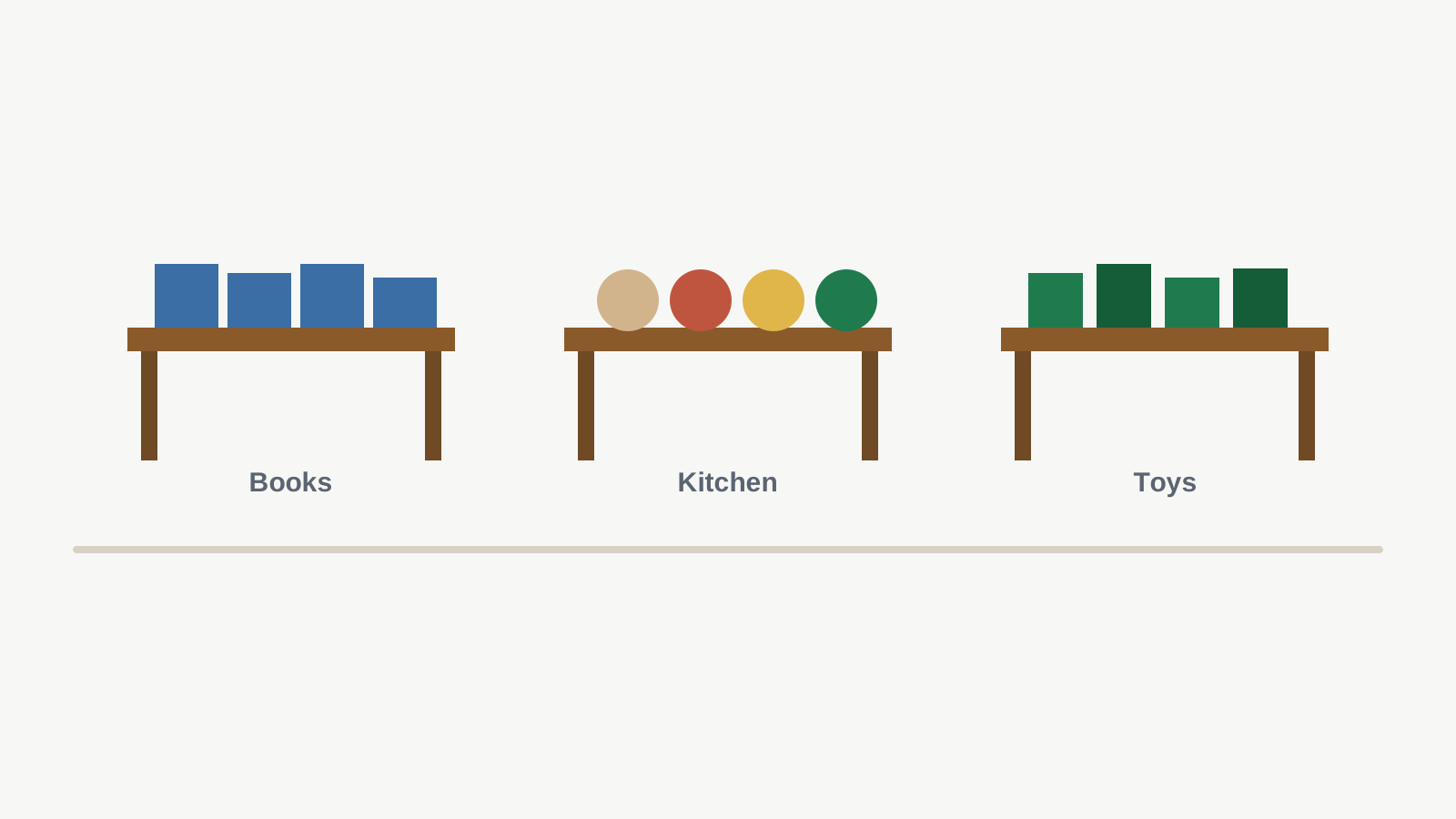
How you arrange your sale changes how much you sell. The goal is simple: make it easy and pleasant to browse.
- Get things up off the ground. Tables, not tarps. People do not like to bend and dig, and items at waist height look more valuable. Borrow folding tables if you need to.
- Group like with like. All the kitchen together, all the tools together, all the kids' clothes together. Shoppers scanning for one category find their people faster and buy more.
- Put your best and most eye-catching items where they show from the street. A nice piece of furniture or a clean bike at the front is a magnet that pulls cars to the curb.
- Keep your checkout by you and near the exit, with your cash box in hand or in sight at all times.
- Hang clothes if you can. A rack sells clothing far better than a folded pile; even a rope between two ladders works.
- Have bags and a little newspaper for wrapping fragile buys — small touches that make people comfortable buying more.
Running the sale day
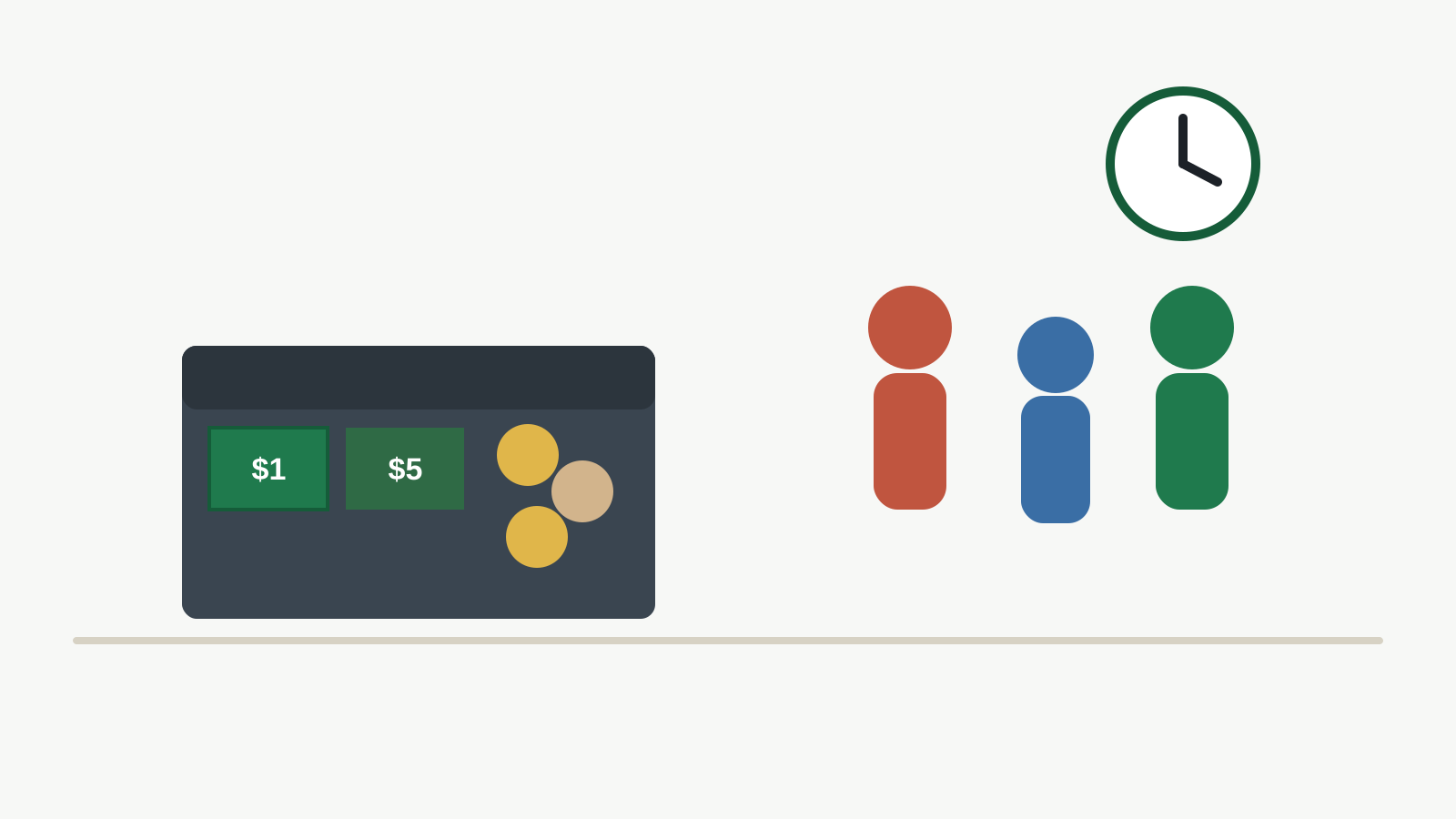
Start with plenty of change. This is the number-one day-of mistake. Get a float ready the day before — a good starting mix is a stack of $1 bills, several $5s, a couple of $10s, and a roll each of quarters and dimes. If your first customer hands you a $20 for a $2 item and you can't break it, you've lost the sale.
Expect early birds. Dealers and die-hards will show up before your posted start time hoping to skim the best items. It's your call whether to let them in early; there's no wrong answer, but decide in advance so you're not negotiating your own rules at 6:45 a.m.
Haggling is part of the game — don't take it personally. People expect to negotiate at a yard sale. Because you priced with a little room built in, you can usually meet in the middle and still be happy. Toward the end of the day, get much more flexible; a lower price beats hauling it back inside.
Keep it safe and pleasant. Keep your cash on you, not in an unattended box. Keep the house locked and don't send strangers inside to use the bathroom. Have a helper if you can, so one person can watch the money while the other answers questions. A friendly hello and a genuine "let me know if you have questions" makes people linger — and lingering shoppers buy.
Accepting payments
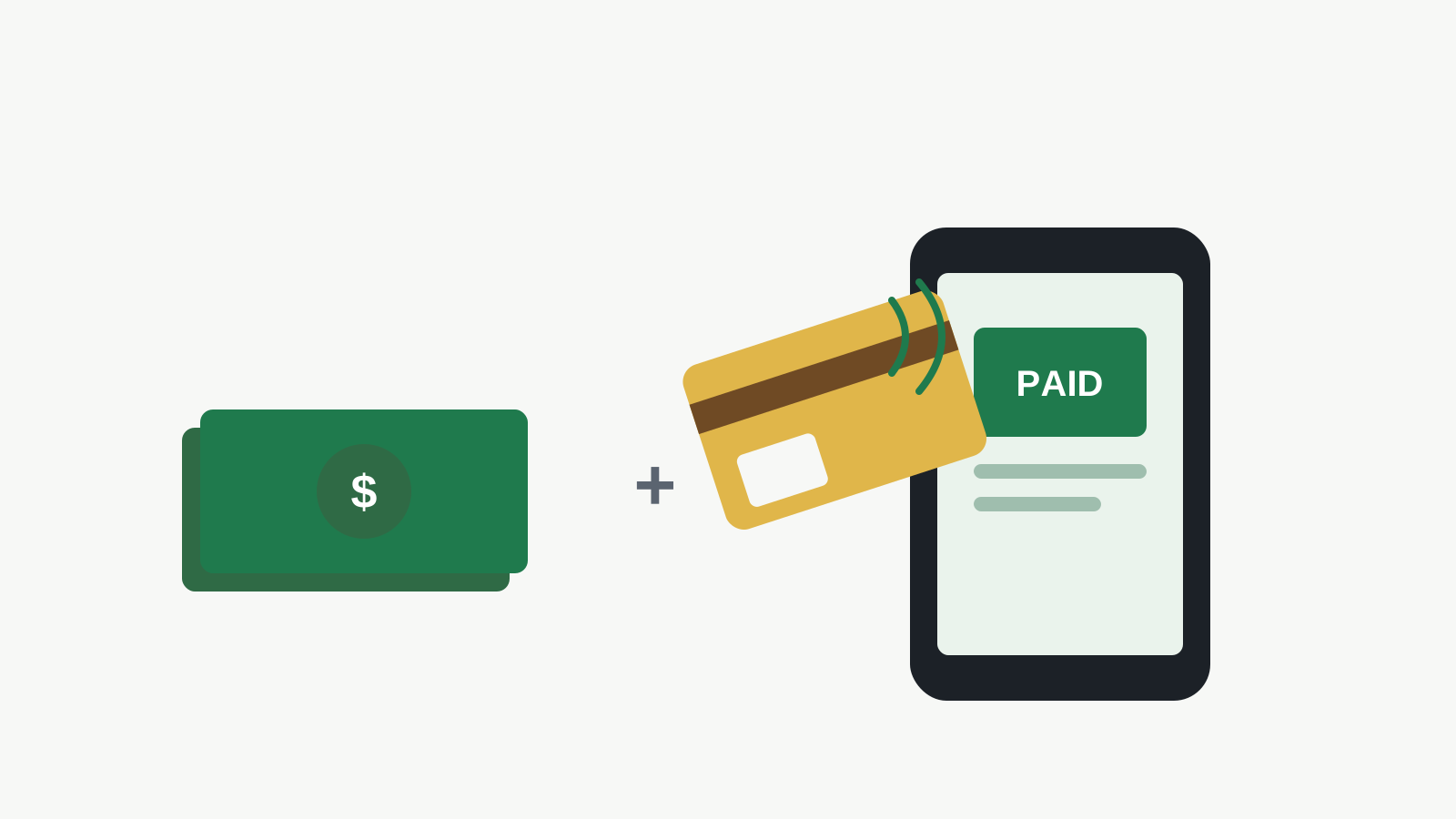
Cash is still king at a garage sale, and for small local transactions it's the simplest thing for everyone. Between your float and the morning's takings you'll handle most of the day on cash alone.
But plenty of shoppers now carry little cash, and "I only have a card" shouldn't cost you a $15 sale. A couple of options bridge the gap:
- Peer-to-peer payment apps. Many sellers accept a quick phone-to-phone transfer for larger items. Have your handle written on a card by the checkout.
- Card payments and selling online. For higher-value items, being able to take a card — or to sell online for local pickup — widens your buyer pool beyond whoever happened to bring cash.
That last point is where a platform like this one helps. On yardgaragesale.com, selling items online is an optional add-on you can switch on for your sale: you connect a Stripe account, list an item's price, and a local buyer can pay online and arrange pickup — no shipping, no selling to strangers across the country, just an easier way to close a local sale by card. The buyer pays the price you set; the small platform and card processing fees come out of the seller's side, so there are no surprise charges tacked onto your shopper. It's genuinely optional — many sellers run a cash-only sale and never touch it — but it's there when you want to catch the buyer who didn't bring cash. The current details and exact fees are always laid out on the For Sellers page.
Read the full guide: How to accept payments at a garage sale — cash, apps, and cards →
What sells best — and what to skip
Not everything is worth a spot on the table. Knowing what garage-sale shoppers actually reach for helps you put your energy where the money is — and saves you from lugging out things that will only clutter the driveway.
Reliable sellers. Tools and hardware are almost always in demand and hold their value well — put them front and center. Kitchen gear (small appliances, cookware, dishes) moves quickly, especially clean and complete. Kids' items — clothes, toys, books, gear — turn over fast because parents are always sizing up and out. Furniture in good shape is a curb magnet that stops cars. Sporting goods, gardening tools, and unopened or gently used household basics all find buyers. And anything with a recognizable brand or a bit of collectibility (records, cast iron, vintage kitchenware, name-brand tools) is exactly what the early birds with the eBay app are hunting for — price those with comps.
Slow movers and things to skip. Old CRT TVs and bulky obsolete electronics rarely sell and are a pain to haul away. Worn or heavily used mattresses and upholstered furniture are a hard pass for most buyers on hygiene grounds. Encyclopedias and dated textbooks, mismatched or chipped dishware, and anything broken or missing parts tend to sit — if it doesn't work, either mark it clearly as "for parts/repair" and price it near nothing, or send it straight to recycling. Half-used toiletries and worn undergarments should not make the table at all.
When in doubt, put it out — cheap. If you're unsure whether something will sell, a 25¢ price tag answers the question for you, and one person's junk really is another's treasure. Just don't spend an hour agonizing over an item you'd have paid to get rid of.
Read the full guide: what sells best at garage sales (and what to skip) →
Wrapping up

By early afternoon the crowd thins, and the goal shifts from "get my price" to "don't put it back in the garage."
- Slash prices late. Announce a "everything half off" or "fill a bag for $2" final hour. Money for things you were going to get rid of anyway is a win.
- Have a donation plan ready. Box up the leftovers and drop them at (or schedule a pickup with) a local charity. Many will take furniture and clothing; some will collect from your curb. Keep the receipt.
- Only re-keep what you'll truly use. The whole point was to clear space — don't let the unsold pile quietly move back into the house.
- Take your signs down and tidy the yard.
Then count your money — you earned it.
Ready to run your own? Getting your sale onto the map where local shoppers are already looking for exactly this weekend's sales is the single easiest way to bring in a bigger, more motivated crowd. Create your free listing, set it up in just a few minutes, and take a look at the For Sellers page to see how the optional online-selling feature works.